We begin by measuring the site and reviewing existing vegetation, hardscape, access, and drainage. Grass, roots, debris, and unstable material are removed before the area is graded.
Next, we address drainage concerns and install a compacted aggregate base. A weed barrier may be appropriate for certain sites. The turf is then positioned, trimmed, seamed, and secured around borders, walkways, patios, driveways, and pool areas. Infill is added where needed, followed by brushing and final cleanup.
Poor grading can create puddles. Weak edge restraint can lead to shifting or wrinkles. Visible seams often come from rushed cutting or poor layout, not from the turf alone. We inspect the complete outdoor area so the finished surface works with the existing property. Homeowners who want a site review can Get a Free Quote.
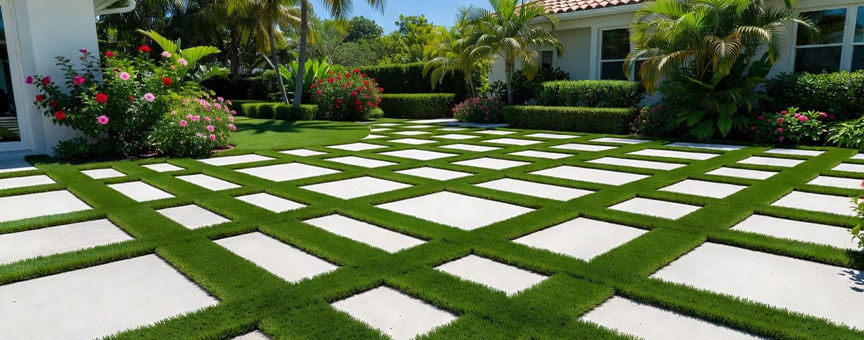
Heavy rain, sandy soil, irrigation runoff, and nearby pools can expose installation problems quickly. A properly shaped and compacted base supports the turf, while permeable materials and planned drainage help move water away.
Surface preparation often matters more than the turf itself. A new product cannot correct a weak foundation or standing-water problem underneath.
Artificial Grass Costs, Maintenance, and Long-Term Value
Artificial grass costs vary with square footage, excavation, base repairs, drainage work, turf quality, access, seams, borders, and overall site complexity. A property visit gives you a more accurate estimate than a fixed online price.
Maintenance is simple but not zero. Remove leaves, rinse spills, clear pet waste, brush flattened areas, and check the edges occasionally. You may use less water and skip regular mowing, but installation has a higher upfront cost and some surfaces can become hot in direct Florida sun.